The flywheel
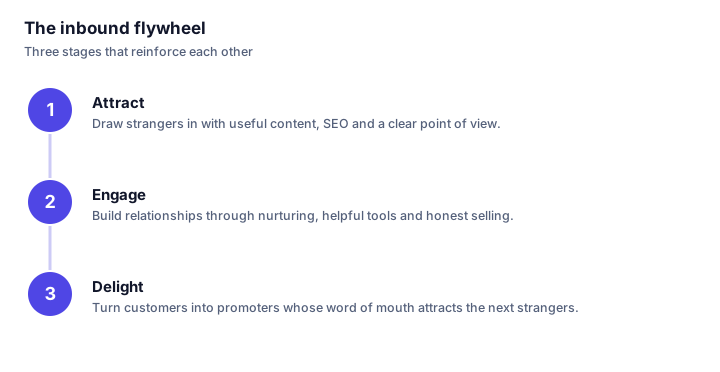
The flywheel is HubSpot's model for how a business grows through inbound. It reframes customers not as the end of a funnel but as the source of momentum — every satisfied customer attracts the next. Understanding the flywheel is the key to understanding modern inbound.
From funnel to flywheel
For decades, marketers pictured the customer journey as a funnel: a wide top filled with prospects, narrowing down to a few customers at the bottom. The funnel has a fatal flaw — it treats the customer as the finish line. Once someone buys, they fall out of the bottom and the model forgets them.
HubSpot introduced the flywheel in 2018 to fix this. A flywheel is a wheel that stores energy: the more force you apply and the less friction it meets, the faster it spins, and the more momentum it keeps. In the inbound flywheel, happy customers are not the output — they are the energy that drives growth, through referrals, reviews and repeat business.
The three stages
The flywheel turns through three stages, the same three that define inbound itself:
- Attract — draw in the right strangers with helpful content, SEO and a genuine point of view. The goal is not just traffic, but the right traffic: people you can actually help.
- Engage — build relationships by making it easy to find information, ask questions and buy on the prospect's terms. Solve problems before you ask for anything.
- Delight — help customers succeed after they buy, so they stay, expand and recommend you. Delight is where the flywheel earns its momentum.
Crucially, all three stages share the same goal — the customer's success — which keeps marketing, sales and service pulling in the same direction rather than handing leads over a wall.
Force and friction
Two forces determine how fast a flywheel spins:
- Force is anything that adds energy: great content, fast response times, a frictionless free trial, an excellent onboarding experience, a generous referral programme. You apply force where it has the most leverage.
- Friction is anything that slows the wheel: a confusing website, slow support, a clunky checkout, poor handoffs between teams, internal silos. Removing friction is often more powerful than adding force.
The practical discipline of the flywheel is to identify, at each stage, where you are adding force and where friction is bleeding momentum — then systematically reduce the friction.
Why the customer sits at the centre
In the funnel, marketing sits at the top and the customer at the bottom. In the flywheel, the customer is at the centre and the three stages rotate around them. This is not just a diagram change. It reflects a real shift: in a world of reviews, word-of-mouth and social proof, an unhappy customer creates friction that slows every future sale, while a delighted one becomes your most effective marketer. Investing in existing customers is therefore a growth strategy, not just a cost.
Using the flywheel in practice
To put the flywheel to work, map your current activities to attract, engage and delight; measure where momentum is strongest and weakest; find the biggest sources of friction (often slow follow-up or a poor post-sale experience); and reinvest in the customers who can spin the wheel for you. The aim is a self-reinforcing loop, where each happy customer makes the next one cheaper and easier to win.
Frequently Asked Questions
- What is the difference between the funnel and the flywheel?
The funnel treats customers as the end point — they exit at the bottom and are forgotten. The flywheel puts the customer at the centre and treats their satisfaction as momentum that attracts new customers through referrals and reviews. The flywheel keeps investing in customers after the sale; the funnel does not.
- What are force and friction in the flywheel?
Force is anything that adds energy and speeds the wheel up — great content, fast responses, smooth onboarding. Friction is anything that slows it down — confusing sites, slow support, poor handoffs. Growth comes from adding force where it has leverage and, especially, removing friction.